
- Cub Scout Activities
- |
- Cub Scout Arrow of Light Adventures & Requirements
- |
- Cub Scout Bears Adventures & Requirements
- |
- Cub Scout Webelos Adventures & Requirements
Pocketknife Safety – What Cub Scouts Need to Know
Pocketknife safety is important for Cub Scouts to learn. A requirement for the Cub Scout Whittling Chip, it’s also just good information for them to know.
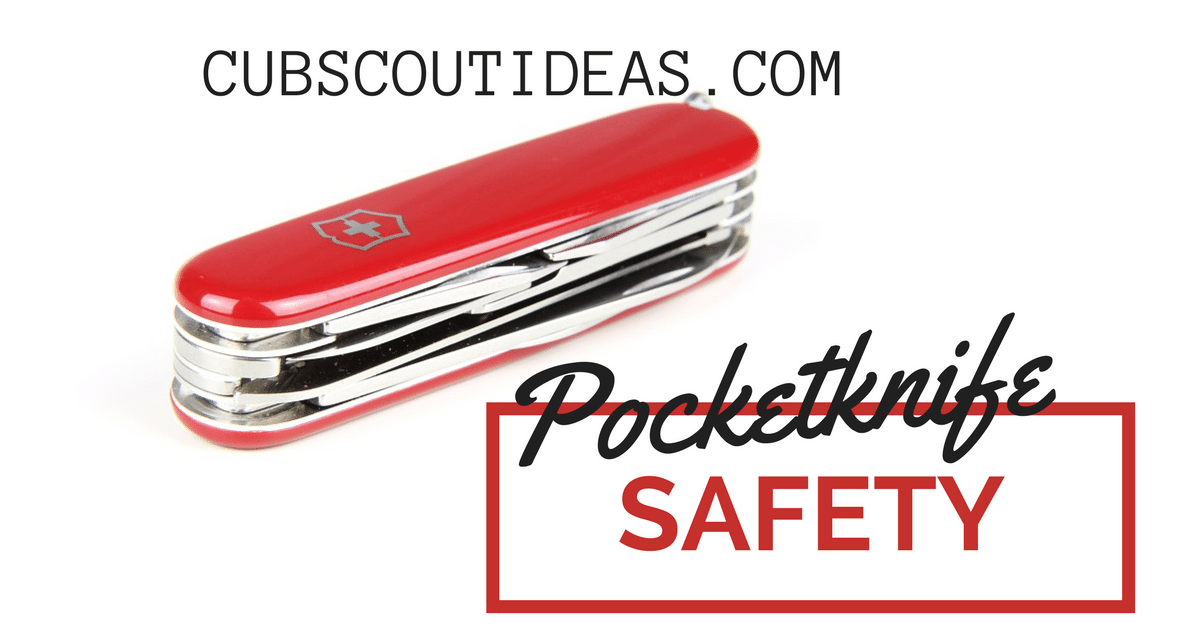
Pocketknife safety is one of the life skills our kids learn in Cub Scouts. Learning life lessons
Our Cub Scouts may seem a little young to be learning about knives, but according to BSA’s Age-Appropriate Guidelines, Bears, Webelos and Arrow of Light scouts can use a pocketknife.
In the Cub Scout Adventure program, the Bear and Arrow of Light ranks require knowledge of pocketknife safety.
Bear Adventure: Bear Claws 2: Learn knife safety and earn your Whittling Chip.
Arrow of Light Adventure: Scouting Adventure 6: Demonstrate your knowledge of the pocketknife safety rules and the pocketknife pledge. Earn your Whittling Chip card if you have not already done so.
Below you’ll find the pocketknife safety information that the Scouts need to know to earn their Whittling Chip.
Whittling Chip Pocketknife Safety Rules
- A knife is a tool, not a toy.
- Know how to sharpen a knife. A sharp knife is safer because it is less likely to slip and cut you.
- Keep the blade clean.
- Never carry an open pocketknife.
- When you are not using your knife, close it and put it away.
- Keep your knife dry.
- When you are using the cutting blade, do not try to make big shavings or chips. Easy does it.
- Make a safety circle: Before you pick up your knife to use it, stretch your arm out and turn in a circle. If you can’t touch anyone else, it is safe to use your knife.
Although it isn’t listed in the Safety Rules published by BSA, one of our readers reminded us about a very important rule. You should always cut away from your body.
Safety Circle aka Blood Circle
The first thing the Scouts need to learn is that they should establish a safety circle, or “blood circle,” in order to safely use a pocketknife. To create the blood circle, grasp a closed pocket knife in your hand.
You should extend your arm with the closed knife straight in front of you. Then rotate your body to either side while continuing to extend the closed knife arm.
No one or thing should be in the imaginary circle that you have created. Also, check your overhead clearance as this is part of your safety circle. If someone enters the circle, the knife should be closed up and laid down.
Knives Are Not Toys
- Close the blade with the palm of your hand.
- Never use a knife on something that will dull or break it.
- Be careful that you do not cut yourself or any person nearby.
- Never use a knife to strip the bark from a tree.
- Do not carve your initials into anything that does not belong to you.
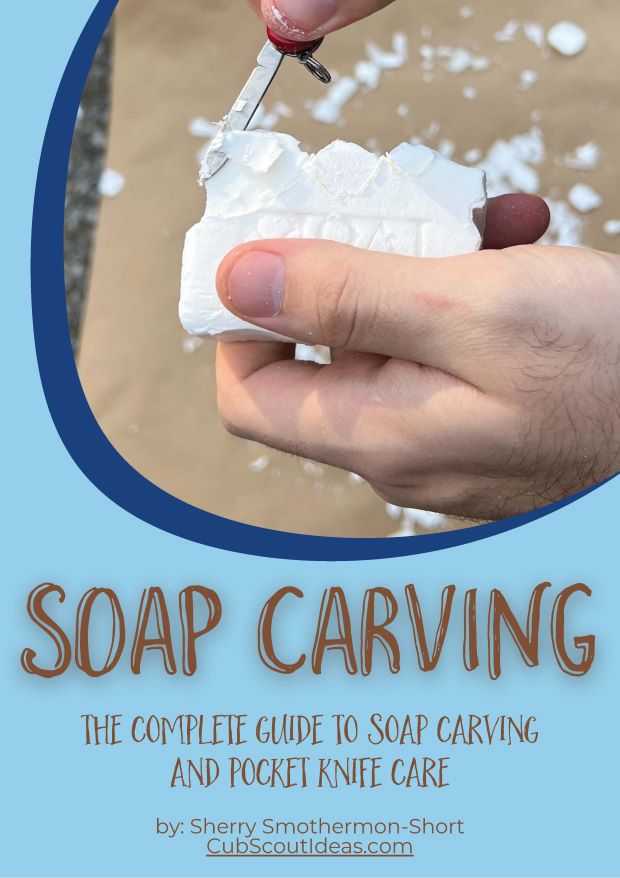
Are you teaching your kiddos how to whittle? Maybe working on earning the Whittling Chip?
Then you need this Soap Carving guide!
In addition to helpful information, you’ll find 10 super easy patterns.
These templates will help even the most inexperienced whittler create a cool carving.
Handling a Pocketknife:
- To Open a Pocketknife
- Hold the knife in your left hand, and put your right thumbnail into the nail slot. Pull the blade out while pushing against the hinge with the little finger of your left hand. Continue to hold on to the handle and blade until the blade snaps into the open position.
- To Close a Pocketknife
- Hold the handle in your left hand with your fingers safely on the sides. Push against the back of the blade with the heel of the right hand and swing the handle up to meet the blade. Let the knife snap shut. It’s sometimes easier for the Scouts to use their fingers instead of the heel of the hand.
- To Pass a Pocketknife
- Always close the blade – never pass an open knife. The receiver should get a good grip on the knife and then say “thank you” to indicate that they have a grip on the knife when taking it. The giver should never let go of the knife until the receiver says “thank you” even if the receiver tries to pull it away.
Taking Your Pocketknife With You:
- Knives are usually used as tools, but they can be weapons too. Many places do not allow knives. Always keep your knife at home unless your parent or Den Leader tells you otherwise.
- Places where knives are prohibited even if you have your Whittling Chip card with you:
- School
- Outdoor school events (school football games)
- Airport
- Pack or den meetings, even after you earn the Whittling Chip
- Cub Scout campouts unless there is adult supervision
- You must carry your Whittling Chip card whenever you are using your knife. If you break any of the rules, a corner of the Whittling Chip card will be cut off. When the 4th corner is cut off, the card will be taken from you. If that happens, you must go through training again, in order to receive a new card. The cutting of corners can be done by any adult who feels safety has been violated. For very serious infractions (such as threatening another scout), the card will be taken immediately.
Note: Several people commented about this practice with some great points. I encourage you to read the comments below. The Scouting Magazine blog discusses cutting corners from the Boy Scouts’ Totin’ Chip. While it isn’t the same, I believe the guidance can be applied to the Whittling Chip.
Bears, Arrow of Light and Webelos pocketknife safety knowledge is so important to ensure that our Scouts know how to safely carry and use a pocketknife. I hope this pocketknife safety information has been helpful to you as you plan your Cub Scout Whittling Chip lesson.
Yours in Scouting,
Sherry
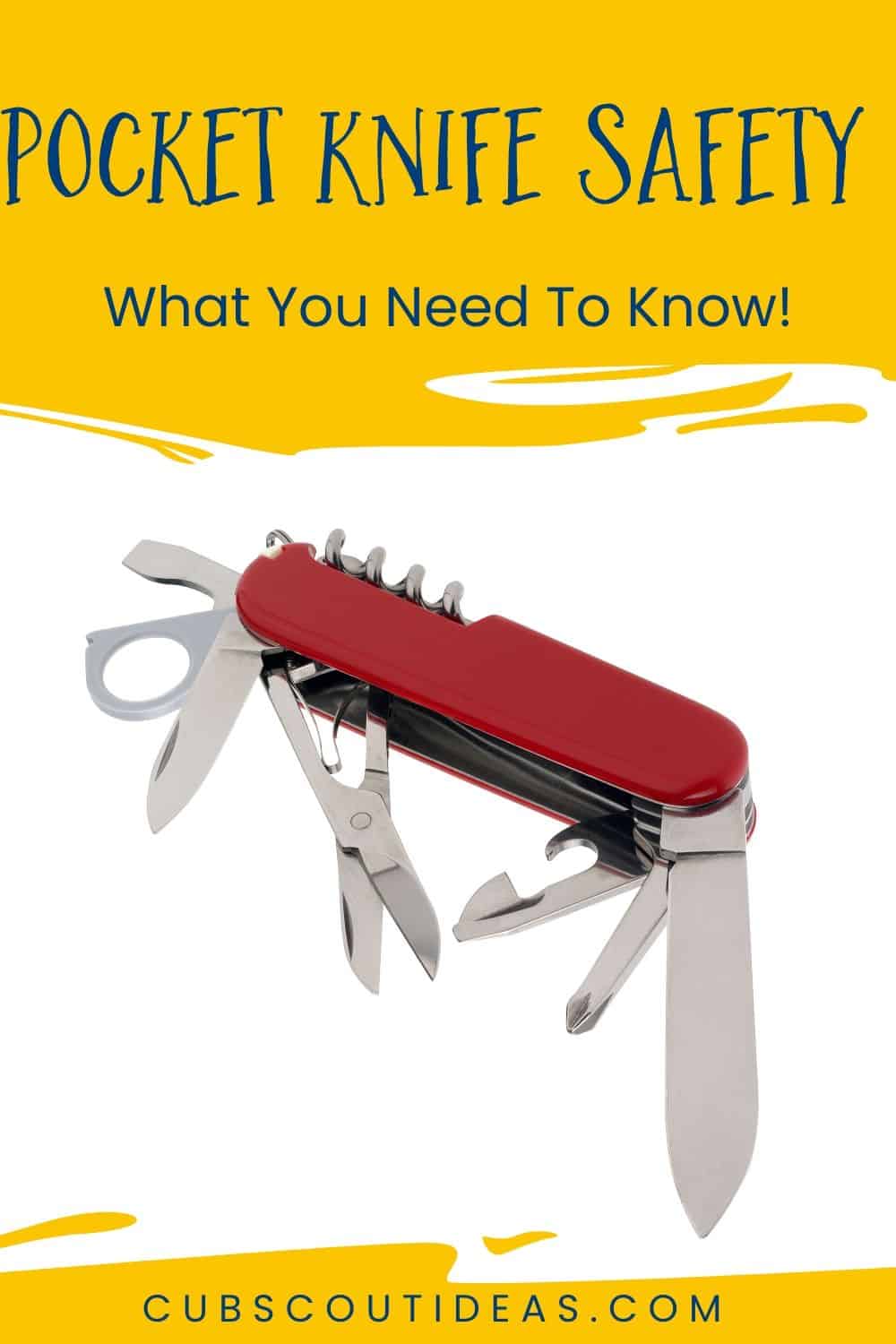
P.S. Only you, as a parent, can decide when it’s time for your son to own his own pocketknife. If your Cub Scout is mature enough to own a pocket knife, take a look at these available through my Amazon affiliate link.
18 responses
The HUGE safety aspect of cutting away from your body when whittling was not mentioned that I could see.
I think it is actually one of the most important safety rules and should be added in immediately.
Thank you!
[…] wrote about pocketknife safety, so read that post for some detailed safety information I’ve […]
All safety rules are written in blood, which means someone got hurt, then a rule was made to prevent the next guy getting hurt the same way. This should be a guiding principle behind all safety training, and used to explain why safety rules are important.
I have begun today discussing knife safety with my nephew. I came here to be certain I don’t miss or gloss over the important bits, and it occurred to me that we as responsible adults and mentors could use some refresher training ourselves.
[…] wrote about pocketknife safety, so read that post for some detailed safety information I’ve […]
Bent out of shape much? It is up to the leader what constitutes a violation. I, as a youth, have seen boy after boy cut themselves and NOT be humiliated with a missing corner. I have seen boys lose a corner for cutting on live wood, or playing with the knife aka not using it as the tool it is.
Sorry ladies, we’ve gotten soft with the lack of pass/fail items in life. The guidelines are there for a reason.
I already know the safety rules and procedures, i need to know how to get the whittling chip.
We get the parents involved. We have added information that the whittling chip, along with their parents decision, allows them when and where they may take or use their knife. And, a strong emphasis that there are places where they are NOT/ ZERO TOLERANCE to bring their knife. We have had 2 in the past 2 years have their knife in their backpack when they went to school. (And a non scout friend who took an older brother’s dagger to the bus stop). We told the story of the non scout who is in an alternative school on the other side of town now for 1 year (no teaching, just a packet of self work to do and no getting up or recess no bringing anything allowed) and has a police record, has to meet weekly with a probation officer and court dates, etc. His brother and mother are devastated but the law is strictly enforced. For this 2nd scout, after talking with his mom, we made a plan for him to teach the lesson on knife safety to the scouts again and share his experience (principals office, police called, and ISS- in school suspension) and discuss the law about weapons of any kind in school. I added other places like airports, sports games, hospitals, etc. We just did this monday night, so I am hoping it will prevent any future incidents. I would be heartbroken if the whittling chip instructions led to legal trouble or a sibling getting hurt. Oh, we also stressed that those with younger siblings needed to be extra careful about where their knife was stored.
you get the whittling chip card and patch from your local scout shop or order online from scout shop.
[…] Cub Scout should have a Swiss Army knife, but after they have earned their Whittling Chip (at least, for most boys!). They make perfect stocking stuffers! I made this bonus #11 because […]
Thank you for this post.
You’re welcome! Thanks for reading.
Sherry:
The practice of cutting off a corner of the Whittling Chip card after a Cub Scout violates a safety rule is NOT official BSA policy. Just think about it. Does it make sense to confiscate a pocketknife from a boy after he has violated safety rules four times???!!! I would hope not!
I have heard some other Scouters say that this practice (cutting corners) is unacceptable because it is considered as a form of humiliation toward the boy because it singles him out and publicly shows his bad behavior (defaced card).
To possess a Whittling Chip card means that the Cub Scout has earned it after demonstrating knowledge of, and skill in, the use of a personal pocketknife. If he should violate the safety requirements, the Whittling Chip card (and knife) should simply be taken away and it must be re-earned. There should be zero tolerance for bad behavior and improper knife handling techniques.
You bring up some very good points that I didn’t think about. Thanks for sharing them!
I agree. Giving a boy 4 chances to continue unsafe behavior is unacceptable. When I witnessed boys throwing their knives between each other’s feet (blade open) I did not embarrass them by cutting a corner. Instead, since it was at a council level function where younger, more impressionable scouts were present, I took their knives and escorted them to their parents. I returned the knives to the parents, not the boys. Knives are a tool, not a toy. carrying a knife at a scout function is a privilege, not a right. If we teach them respect for the tools they are using, you don’t have to worry about embarrassing them by calling them out on their bad behavior…it won’t exist.
I absolutely agree. Take it to the parents, so the matter can be dealt with immediately, and the parents can do reteaching and decide when and if the scout can be trusted with a knife. Great comments and information everyone.
Reading over the material, I think there is a bit of a misunderstanding of the ‘cut corners’. This is for MINOR offenses, such as tossing a CLOSED knife, not cleaning it before putting it away, etc. Things that are a bad idea, but do not put someone in immediate danger.
Actions that are dangerous, like throwing an open knife, or using it as a weapon are obvious zero-tolerance infractions.
In between, there are some infractions where a judgement call needs to be made by the adult. For example, scout #1 is working at a table, and has established a safety circle. Scout #2 walks up to see what scout #1 is doing.
Suppose scout #1 stops using the knife, but doesn’t close it. I would say that might cost him a corner. If scout #2 has his whittling chip, invading another scout’ s safety circle might cost him a corner, as well.
Now suppose scout#1 keeps working, and scout #2 is checking out his project within the safety circle. Now THAT would probably warrant taking whittling chips from BOTH scouts. Nobody got hurt, but danger was imminent.
Recognizing the difference is part of our job as leaders.