
How to Get Parents Involved with Cub Scouts

Cub Scouting is a volunteer-run organization, but do you struggle to get parents involved with Cub Scouts? Consider these 14 ways to get the parent volunteers you need.
Recently, one of our readers asked for suggestions on how to get parents involved with Cub Scouts. That is something that many Cub Scout packs struggle with. How do we get parents to help out so that the burden isn’t all on the den leaders or committee members?
We all are busy, but I’m a big believer that we make time for what’s important to us.
Scouting isn’t like soccer or baseball where we’re on the sidelines cheering our kids on. Cub Scouting is hands on, and it’s for the whole family.
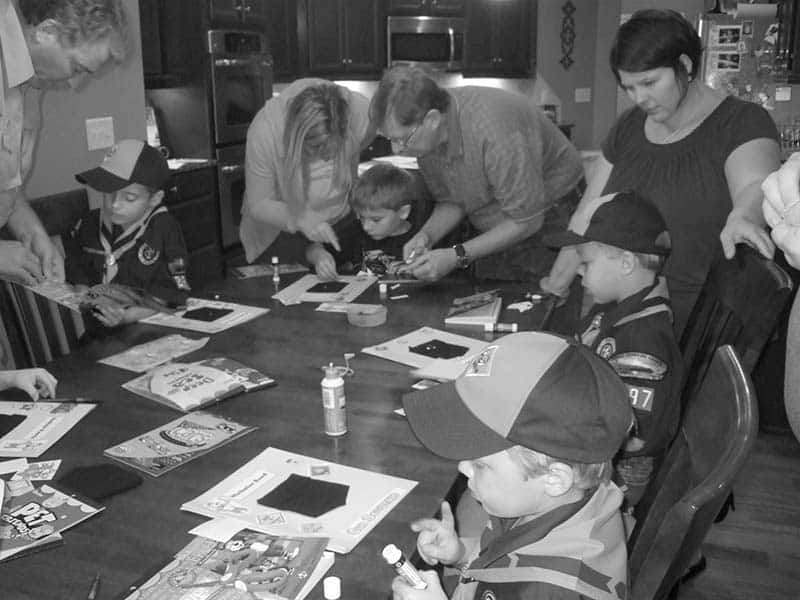
Whether you’re helping them learn how to tie knots or showing them how to use hand tools or teaching them how to cook their own breakfast, parents will definitely need to be involved.
And that doesn’t mean that parental involvement is only being one of the registered leaders. In fact, family involvement comes in many forms. You may take a leadership role such as committee chair or pack committee member, but Scout parents can help deliver the Cub Scout program in many other ways such as helping with the Pinewood Derby or Blue and Gold banquet, planning field trips as one of the den activities, or helping run the monthly pack meeting.
I did some research and found 14 ideas that may be helpful to get families involved with Cub Scouts. Not all of the suggestions will be appropriate for your pack or den, but I hope that some of these will be beneficial for you.
14 Ideas to Encourage Parents to Volunteer for Cub Scouts
- Explain the benefits of volunteering.
- Set expectations.
- Ask personally.
- Start early.
- Break up jobs.
- Share roles.
- Know your parents.
- Discover talents.
- Have clear expectations.
- Define responsibilities for your specific pack or den.
- Provide training.
- Plan den meetings.
- Mentor new leaders.
- Use drastic measures.
1. Explain the benefits of volunteering. The number one thing that we need to stress to new parents is that they have a great opportunity to interact with their children in a way that they wouldn’t otherwise.
A great (albeit a bit guilt-laden) appeal you can use with your parents is the Adding Machine Tape Demonstration. I like this because it drives home the point that we really don’t have a lot of time with our kids before they’re off to live their own lives.
2. Set expectations. In our pack, we tell all new families (and remind the current ones) that Cub Scouting is a family program. It is run by adult volunteers, and we need every family to participate in order to make it successful. We expect each family to volunteer in some way during the year.
3. Ask personally. While talking to or emailing your entire pack is efficient, it’s pretty easy for everyone to have the “someone else will volunteer” attitude. Personal appeals and direct contact usually work better.
Asking an individual to do a specific job makes it a lot harder for them to say no! Start with the pack approach, then talk to parents individually for any jobs that aren’t filled yet.
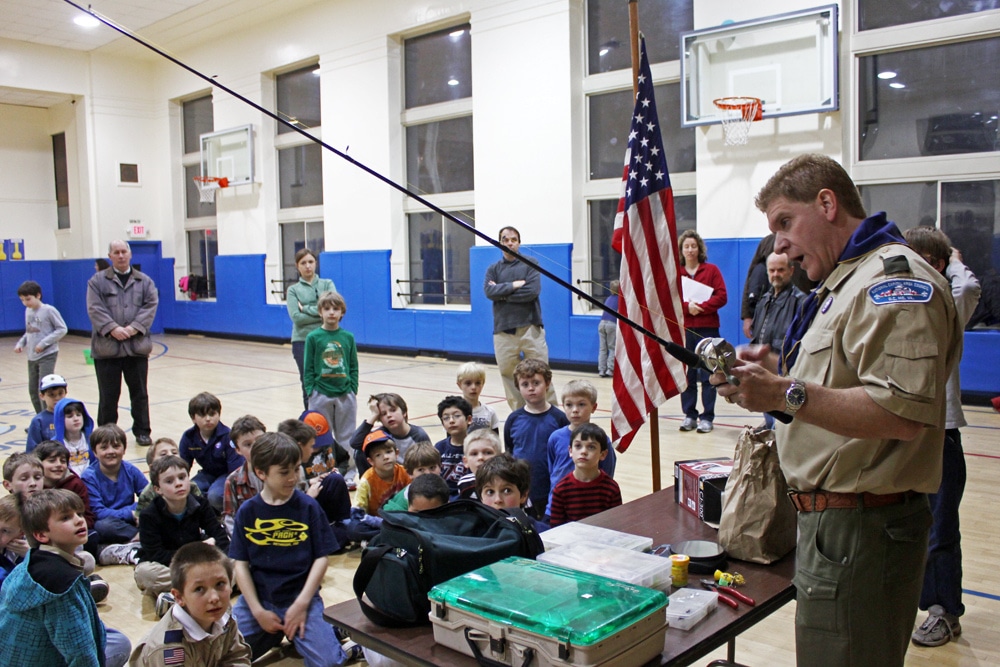
4. Start early. When the younger Scouts are Lions or Tigers, they have an adult partner who must attend with them, so use this opportunity to get them involved.
For example, ask a parent to lead the gathering activity for a particular meeting. When you first arrive, ask a parent to help you get everything set up.
One mom of a Tiger said she couldn’t be the leader, but she would plan all of the outings. We also told my Tiger families that they would each be responsible for leading one meeting.
5. Break up jobs. No one wants to be the “fund-raising committee chairman”, but they might be willing to coordinate the popcorn sale or organize the lemonade stand at the local festival.
Splitting up responsibilities could allow some parents to get involved in Cub Scouts who might not otherwise be able to.
6. Share roles. Dens can have co-leaders who take turns with the meetings. One den leader is responsible for one meeting; the other is responsible for the next meeting.
My husband was the den leader for our Arrow of Light Scouts, and I was the assistant leader. I planned the meetings, and he ran them.
7. Know your parents. You may find out that one parent is reserved and introverted. Don’t ask that person to lead a meeting or head up a committee.
Instead, ask him if he would be responsible for keeping track of advancement and awards for your den including going to the Scout Shop to buy the awards. Jobs that are more “behind-the-scenes” will be better suited for this type of parent.
Leading songs or helping with Cub Scout skits are good jobs for the parents who are outgoing.
Matching the job with the parent’s personality will make them feel more comfortable accepting the job.
8. Discover talents. Many packs have parents fill out a talent sheet similar to this one. It’s a lot easier to ask someone who is an avid woodworker to lead the Bear Baloo the Builder adventure than to ask a person who has never picked up a hammer before before. Parents will have hobbies and interests that you never expected.
9. Have clear expectations. People want to know what they’re getting into before they agree to do something. We all know what it’s like to be told “all you have to do is…” only to find out later that there’s a lot more to it than that.
10. Define responsibilities for your specific pack or den. It’s easy to simply point someone to a generic position description online, but that might not be how your pack operates.
For example, your secretary may be the one who is responsible for any required tour permits, but that isn’t on the generic pack secretary job description provided by Scouting America. Ensure that the job description matches the pack’s expectations.
11. Provide training. While the BSA required training is good, it isn’t enough, especially for new den leaders. Your pack should have additional, practical training.
Parents of new Scouts who have never been involved in Scouting are especially hesitant to volunteer. We owe it to our Cub Scouts and our parents to ensure they are spending their volunteer time actually planning activities–not researching what goes into a den meeting.
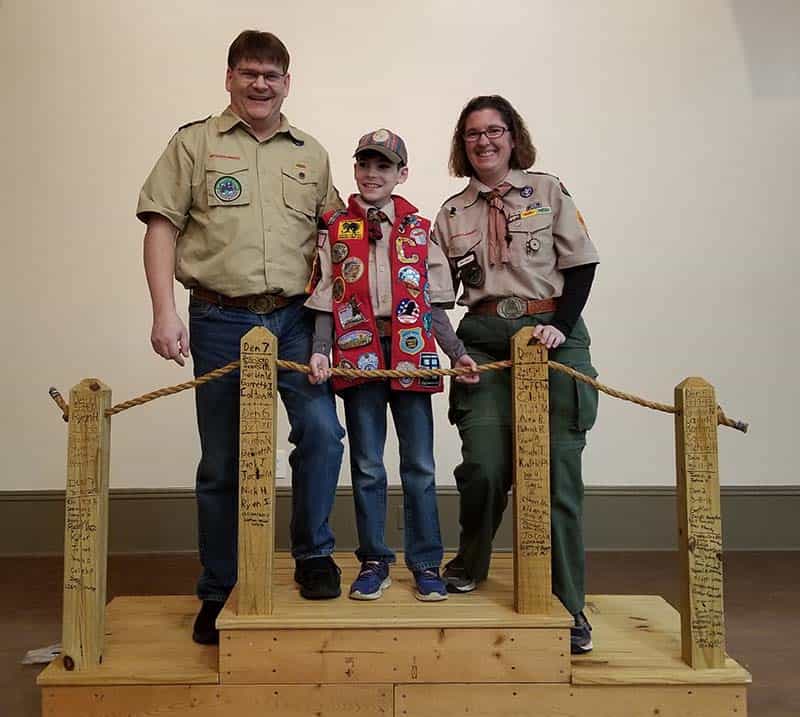
12. Plan den meetings. Planning is now easier than ever, thanks to the new Den Meeting Resources!
Adults can also volunteer at the pack level to help plan pack activities such as a camping trip.
13. Mentor new leaders. New leaders need to know there’s help available. A casual “call me if you need anything” isn’t good enough.
The Cubmaster, Committee Chairperson or an experienced Den Leader should run the first two meetings for the new den leader so that she can get the hang of the meetings.
At a minimum, they should attend the first den meetings with the new leader. After that, call or email the new leader to ask what questions they have.
14. Use drastic measures. In my research for this article, I discovered one Scouter’s extreme method.
He says, “I have always promoted the ‘if-the-program-is-important,-here’s-what-needs-to-be-done’ approach. … I never had to cajole, beg, plead, guilt, people into doing something they didn’t think all that important.” Here’s how it works:
At a pack meeting, have an individual sign up sheet for each event/activity during the year. Ask parents to sign up as they come in the building. After the meeting starts, collect the sign up sheets. Pick up a sheet that doesn’t have a volunteer and hold it up. Say, “here’s the fall camporee flyer, who wants to take charge?” If no one raises their hand, crumple up the paper and throw it in the trash. Move on to the next sheet with no volunteers.
I like the concept but not necessarily the approach. I’m not sure I would crumple the paper and throw it away. I would, however, say that since we can’t get a volunteer, we’ll need to cancel the event. “It was so popular with the Cub Scouts last year, and I hate that we aren’t going to be able to do it this year” would be my approach.
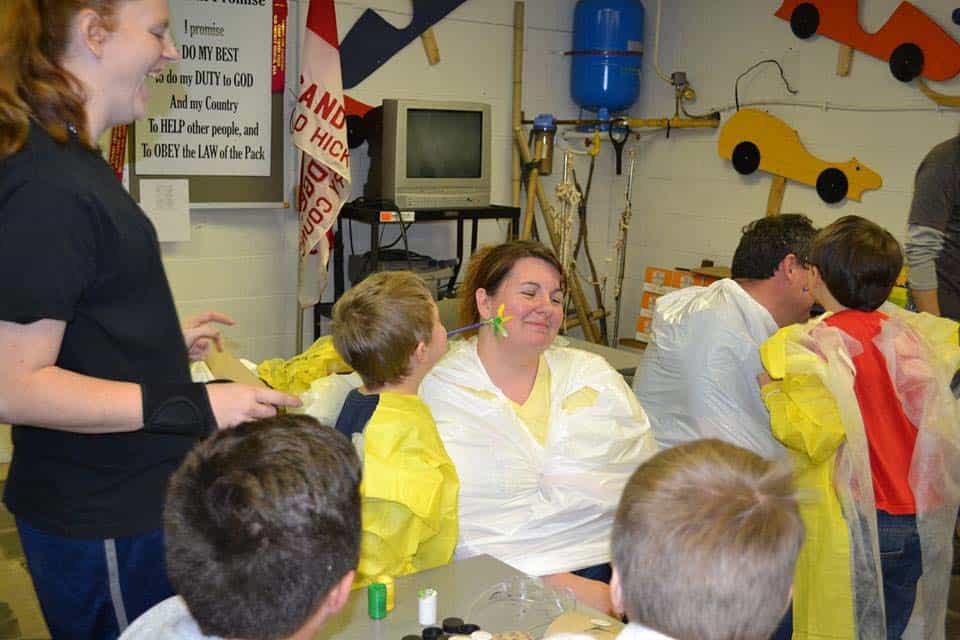
Our young people need some of our free time to give them the best possible program. Hopefully, these ideas will help you get the volunteers you need for this.
What other ideas do you have for encouraging parents (or other family members) to help out? Leave a comment below!
Yours in Scouting,
Sherry
P.S. If this article gave you some ideas to help with recruiting parent volunteers, sign up below for more Cub Scout suggestions!
38 responses
-
Hi Steve,
Thanks for your reply. Believe it or not I’ve been a trained leader since my son was a Tiger. I participated on the den leader training just because I wanted to really understand the program and maximize our experience with it. During our 4 plus years as the Pack I’ve served as Secretary (2 years) Assistant Den Leader (1 year), Popcorn Kernel (1 year) and Committtee Chair (currently in my 2nd year). I’ve take several position specific trainings since my son was a Tiger. I’ve also done BALOO and OWLS, attended multiple Pow Wows and completed almost every available online training. Most recently I’ve become a Supernova mentor and am working with the scouts in the pack to earn the Webelos Supernova award. I’m not sure what more I can do to show in serious.
Funny that you mention district round tables. One of my son’s den leaders actually runs them for our districts so I can’t hang many hopes on that. I’ve mentioned this issue to the Cubmaster before to no resolve.
You make a good point about potential challenges with maintaining 2-deep leadership with the way the den is run.
I keep telling myself we only have until February and it will all be over. I enjoy being involved with scouting and look forward to getting involved (behind the scenes that is) with the troop or district once my son has bridged to Boy Scouts.
-
Cyndi, that is so true!
-
I finding it interesting that this article is about strategies for involving parents. My son is in a Webelos den in which parents are encouraged to drop their boys off (ever since they were wolves) and leave the leading to the den leaders. I would like to be involved and to know more about what’s happening in the den, but the den leaders aren’t supportive. My son really wants to stay with the den/pack otherwise I would have pulled him out by now. Parents have never been asked to help with delivering the program, even though I’ve often read that parents should act as “activity badge counselors.”
-
Kim,
As a former Cubmaster and a current District Training Chairman, you note caught my attention and created some red flags.For Webelos in particular, there is some substance to what the Den Leaders are saying. The Webelos program is supposed to be geared towards transitioning the boys from an adult led program (Cub Scouts) to a boy led program (Boy Scouts).
That said, their approach is not the recommended approach and your Cubmaster should be counseling them not to alienate the parents. You have ever right to know exactly what is happening in the den and cannot be denied access Cub Scout events, the program is fully transparent. No parent should be discouraged from attending any event. Off hand, I can think of only two situations where a parent would be discouraged from attending a Cub Scout activity. A parent who has been disqualified for membership (i.e. they failed a background check) for obvious reasons. The second would be Youth Protection Training. Now that several states have instituted mandatory face to face youth protection training requirements, those state requirements may preclude your participation until you have completed the training.
Without knowing the specifics of the situation (how many leaders, qualifications, training, etc.), a typical Den that has a Den Leader and Assistant Den Leader is asking for trouble by excluding additional leaders. The first issue is two deep leadership. If something happens, they run out of leaders quickly. They should be utilizing every resource they have at hand.
If you are serious about helping, show the Pack Leadership that you are serious. Becoming a registered Leader starts the process (and it forces the Pack leadership to involve you more). Membership is cheap and it provides you some additional protections as an adult leader. Get a uniform and take ALL of the online training and you’ve now become an invaluable asset to any Pack (actually, any unit). The is nothing that says you cannot take any online course you wish. As to time, you can complete every online course in a single evening (not recommended). Actually, you don’t even have to be a member to take the courses. Technically speaking, you don’t have to be a member to take most any “in-person” course. This will arm you with the basic skills necessary for the Youth program, you at least have a good understanding of the ground rules. Suggestions from a “Trained” leader carry more weight than suggestions from a non member parent because a trained leader better understands the boundaries, methods and purposes of each phase of the program.
Also, look into attending District roundtable meetings and talk to the District Commissioners about your challenges. Fair warning, you may get recruited for a District level role.
Steve
-
-
-
Good points. I would like to add that when you have a parent willing to help make sure you find a way for them to help, even if you really don’t need it for what they volunteered for, if you don’t the next time when you really do need their help they will not be so willing to offer. I have seen not only the pack I was involved in but in other organizations with my children people that volunteered for something specific because it was their gift or where their expertise was not be called for whatever reason. The next time that it was asked that person did not even volunteer even though they were more than capable of helping. And as we all know there can never ever be too many volunteers to run the program.
-
I read your comments James. I agree that you can’t take a hard lined approach with the parents. They must percieve a value in the program for them to keep their son involved. In my experience, elementary school age boys and their families are in the process of finding out what they are interested in doing. I always approached my den meetings as if I were a boy in the den. I have the advantage of having been involved with scouting since I was 7 years old, and I am blessed with a very good memory. It really made a difference for me. guidance from leaders further along in the program is crucial for new den leaders to be sucessful. i always made a point to make my activities as fun as possible, and avoided any dead time in my meetings like the plague. the program guides that that were put out a few years ago give a lot of solid material, but can sometimes fall a bit flat when it comes to being fun. As the program states, “Do your best”, it is not only something for the boys to follow, but the leaders as well. In my opinion, at the early part of cub scouts (tigers and wolves), if you cant figure out a way to make what you are teaching fun, then fudge it up until it is fun for the boys. that is what will keep them coming back. My den ballooned up from 9 to 16 boys by webelos 1 because I got the message across to the boys in a way that was fun for them as well as interesting. I also founf that giving the boys a chance to discuss your topics draws them into it more, even if they run away with the conversation and get completely off track.
as far as parents go, your not going to win all of them over. However, if you and your leaders really love the program, and let it show, most of the parents will be engrossed in the level of enthusiasm and passion you have for the program. You’ll win a lot of them over. As far as songs go, it’s more about the showmanship of the singer than anything else. If the song leader is having a blast singing, it will be infectious. Trust me.
Using the approach of giving the parents small jobs to do is an effective way to ease parents into helping out, but it’s never a guarantee that they’ll ever get sucked into being a full on leader. it’s just a way to se who is out there and who you may be able to get moe involved with the program. Honestly, one of our pack’s best adult recruitment strategies was going to summer camp. It gave the adults a chance to hang out for prolonged periods of time, to get to know each other, and to develop a sense of comraderie that makes it that much easier to ask for volunteers to get involved. thats my 2 cents.
-
Good points, Kevin!
-
-
I found this article some time ago and used many of the ideas as cubmaster. Here’s what happened:
1. Explained benefits. Was told they get all this stuff from church groups, without having to do anything except show up.
2. Set expectations. So we told them. And they left and didn’t come back.
3. Ask personally: our Akelas have problem telling someone no to their face.
4. Start early: this works when the early program is worth doing. Tiger cub year, as it is, is so boring and irrelevant to a first grade boy. Too much like school.
11. Provide training… I can’t get them to complete anything beyond YP, even if it’s online and they are online all the time. Taking a few hours to do Cub Scout training is simply too big a demand on the parents in my pack.
14. Tried this one. Asked for tiger den leader volunteers, even offered to split the position as many ways as necessary, give past meeting plans, etc. No one volunteered. I said, I guess we won’t have a tiger den this year. And they got up and walked out.I could go on, but the thing we have to compete with are sports that require no parental involvement (even discourages it) and our program that demands parental involvement. Parents want to just sit back and watch their kids over a smartphone screen, until they see a reason to do otherwise. Songs, crafts, skits, earning badges just isn’t enough for parents; it requires too much work on their part.
All it takes to snuff out a Cub Scout is a disapproving look from mom or dad. I can’t count how many times we tried a song and saw mom or dad roll their eyes and their boy stopped singing. Forget boys thinking scouting isn’t cool, it’s the parents who think that.
Forget gay people and atheists. Parents are the real enemy of scouting
-
James, I’m so sorry to hear that you’re having so much trouble with parent volunteers. I wish I had the solution for you, but I don’t. Talk to your district executive. He or she may be able to give you some guidance.
Thanks for reading!
-
James, are you sure your not in my unit? You described us well. Parents these days would rather play on their phones than help out. Our district leaders just tell us we need to “try harder”. We are a few people doing “everything”.
The new cub scout program is a lot like school and is harder for the den leader, parent, and the boy. Boy Scouts is worth it though. It is hard when we are competing with sports, parents that don’t care, and all the other stuff out there.
-
-
Well this Cub Scouting program has huge potential. But very hard to get a sensible plan to operate the program. It amazes me how they (BSA and individual units) tell us about these leaders who appear from somewhere and are somehow selected and are supposed to be trained and we hear about a few simplistic activities and are all good with it. Where should the leaders come from? The parents of course. A few parents? NOOOOO!!!! All parents who have boys in this program should be involved as leaders. This makes the job of running a Pack or Packs a lot more reasonable and successful. You have 5 leadership positions as far as Chair, Cub Master, Webelos Leader, Bear Leader, Wolf Leader and Tiger Leader. But you need at least two assistants for each of these leaders. Here’s why. If just one leader is absent any given week, you must have another trained leader there because you need two deep leadership. So a Pack needs at least 18 leaders and as many volunteers as possible. If you are under the impression that your job of choosing these leaders means you’re done when there is a leader and an assistant, then maybe you should be an assistant and show up when #2 isn’t there!
There are two placehese boys can go after Scouting if they don’t learn discipline and skills from
We live in a real world. Our boys are so important that running this or any other program for them that is dumbed down or doesn’t do what it advertises it will do, is a waste of time and will likewise be of little benefit to boys or parents.
There are two places these boys can go after Scouting if they don’t learn discipline and skills from focused parents. One is the Army and the other is Jail. A lot of work to raise good boys, let’s do it.
-
Yes, Bill, it does take all of the parents helping out! Thanks for reading!
-
-
Very useful article.
I have heard of the adding tape approach but i appreciate the link to it.
I will probably use this in the future.Thanks!
-
You’re welcome, Jeff! Thanks for reading.
-
-
Hi! I have a son who will be eligible to start Cub Scouts in the fall and he’s saying he doesn’t want to join. Know why? I am a Girl Scout leader of a troop with 49 girls and he HAS to come with me every week… He hates it. ;^) I think when he sees it’s all about HIM for a change, he will LOVE it.
Anyway, found this post on Pinterest and think it is wonderful and fitting for GS, too! I’m now subscribed and look forward to more inspiration.
-
That is hilarious! Tell him he’ll get to shoot BB guns and bows & arrows. Maybe that’ll be a good incentive for him.
Thanks so much for your kind words!
-
That did it for my boy who didn’t want to join right away. He heard about camp, BB guns and archery, from his friend, and he was sold. Great ever since.
-
HA! I knew it! Thanks for letting me know that worked.
-
-
-
I lead a cub scout pack and girl scout troop and find the GSA is a lot more active with connections in the community across the arts, STEM, sports, etc. The BSA has a couple of camps and 1-2 sporting events, so I find it lacking as an overall growth experience and most of the planning falls on the parents. With that said, I do see that the BSA curriculum is very ironed out and it’s much easier to find free online resources.
-
-
[…] the boys into teams, and assign a parent to work with each team. Give the parent the stack of index cards for that team. Have the boys […]
Leave a Reply